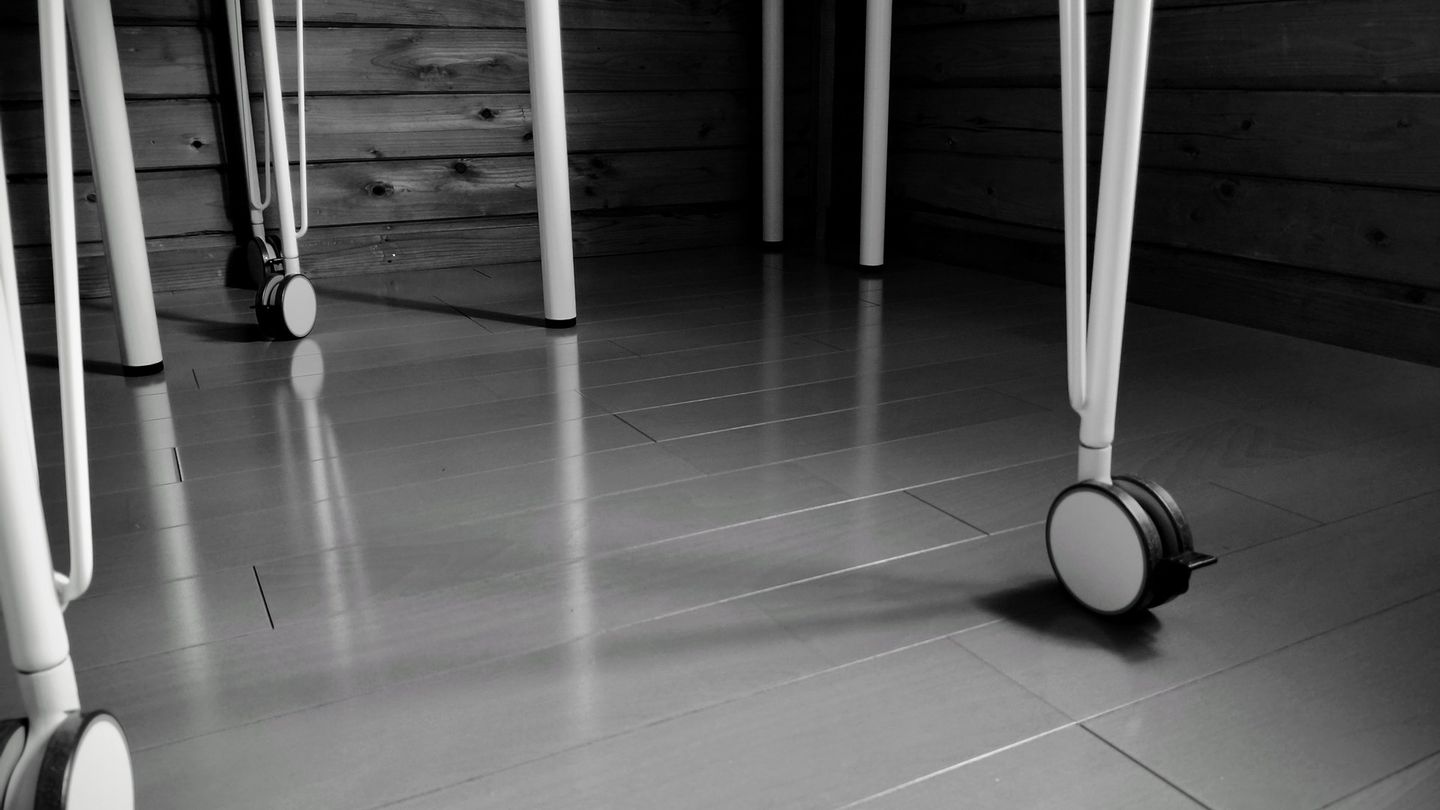
Overview
I wanted to make an IKEA mix-and-match desk easier to move by using two standard legs and two caster legs. There was just one problem: the two types of legs were slightly different heights. This is how I leveled the desk by adding wood spacers between the tabletop and the caster legs.
What I used
Tabletops: LINNMON 100 × 60 cm (39 3/8 × 23 5/8 in) and LINNMON 100 × 45 cm (39 3/8 × 17 3/4 in)
Standard legs: ADILS
Caster legs: KRILLE
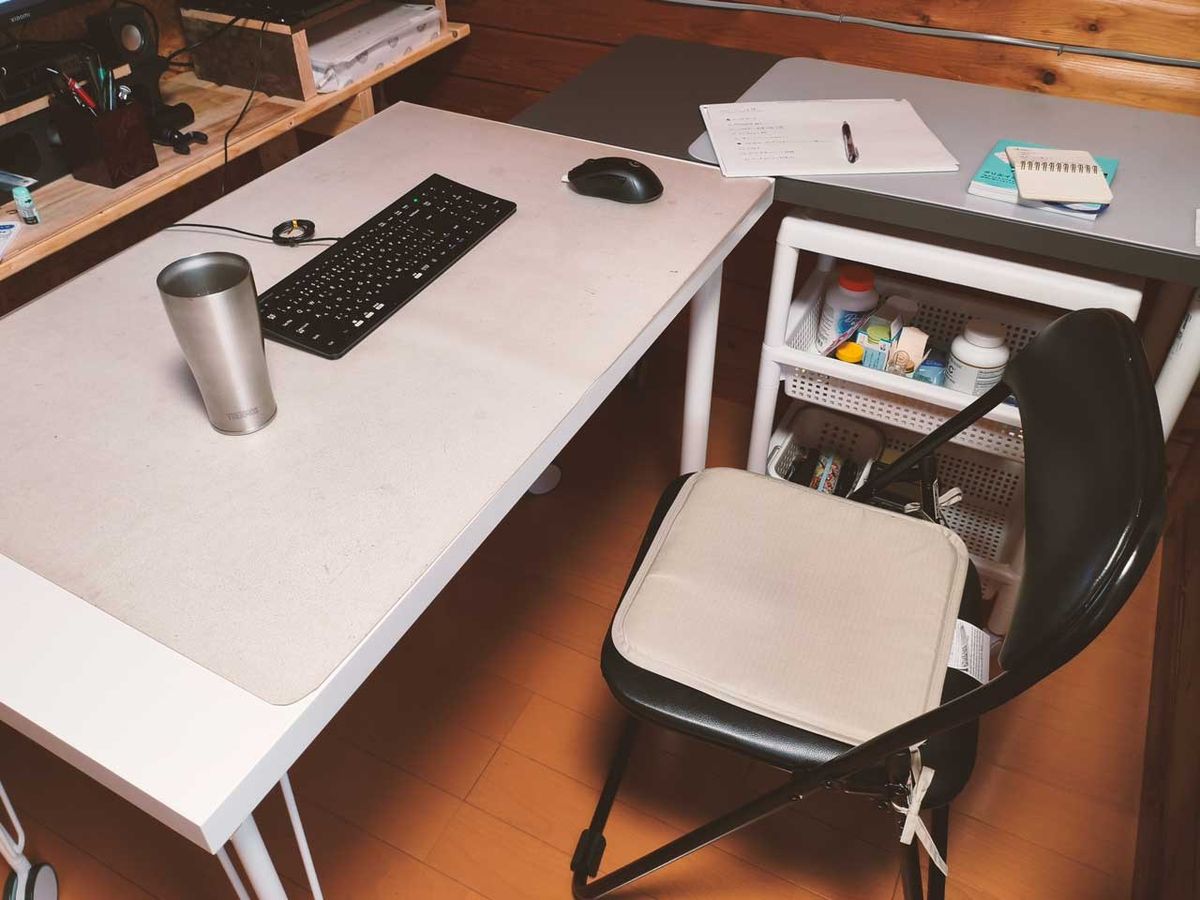
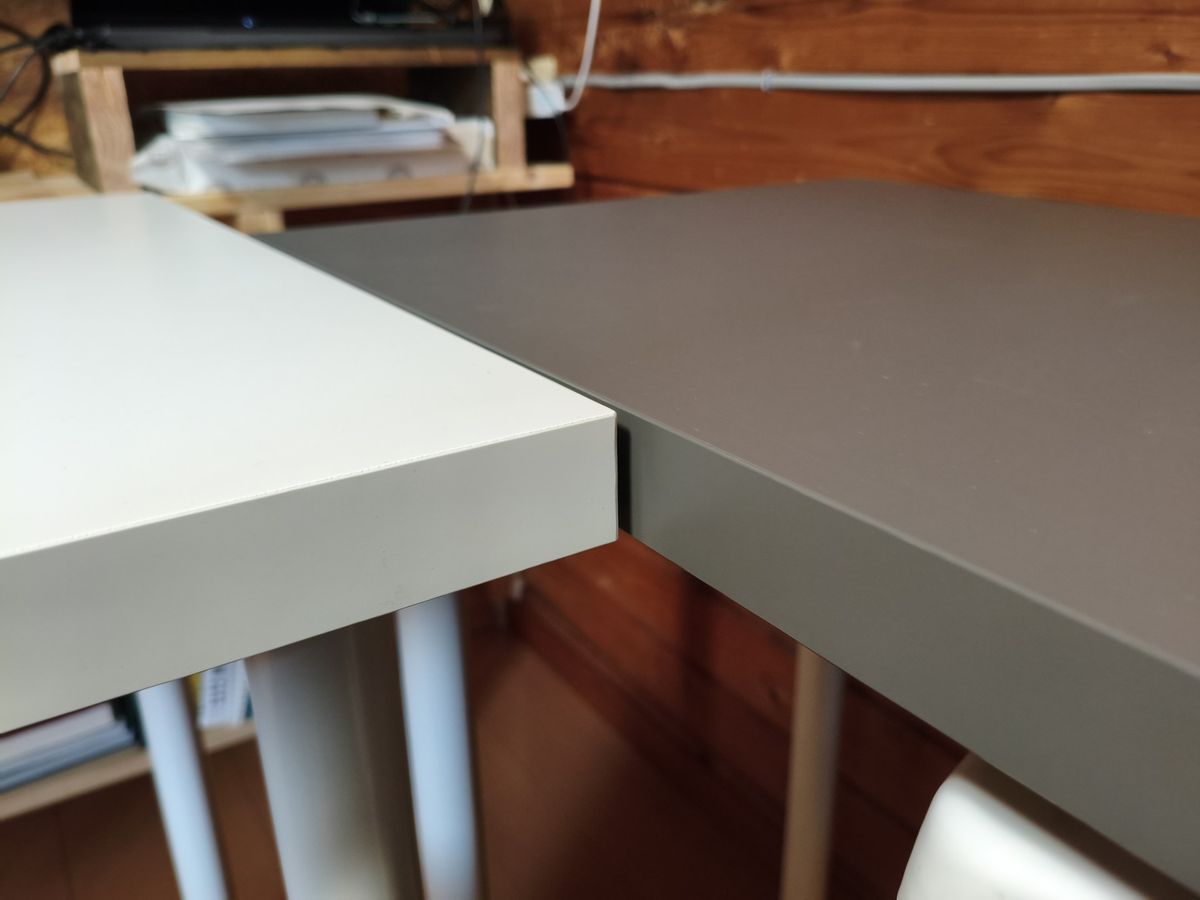
I eventually ended up with two desks arranged in an L shape.
How I Got Here
What I wanted to do
My room is small, so every night before bed I move my desk out of the room.
I had been either lifting it or dragging it. Casters would make it much easier to maneuver through a tight space, but if all four legs had casters, the desk would move while I typed.
My idea was to put standard legs on one side and caster legs on the other. Then I could lift one end and move it like a wheelbarrow. With that plan in mind, I went to IKEA and bought the following:
Tabletop: LINNMON 100 × 45 cm (39 3/8 × 17 3/4 in)
Standard legs: ADILS, two
Caster legs: KRILLE, two
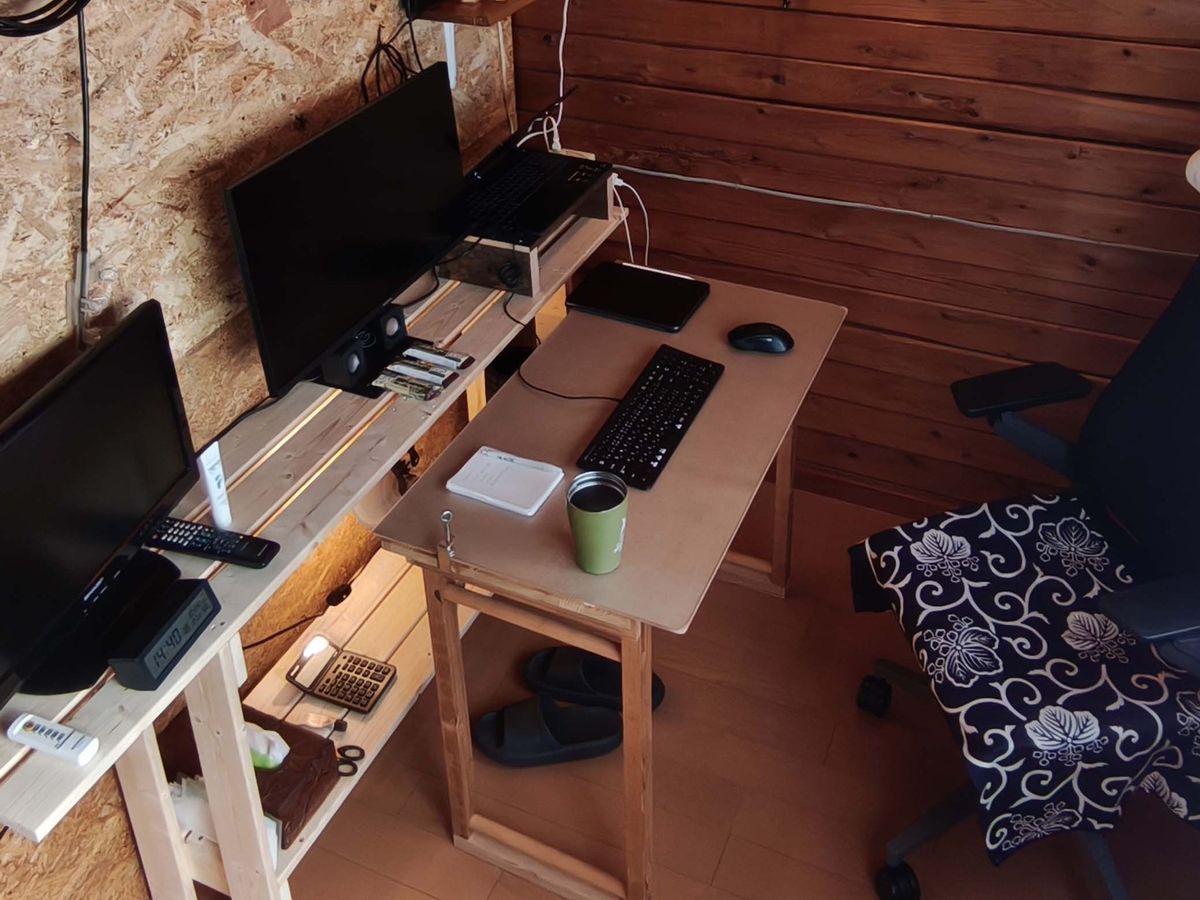
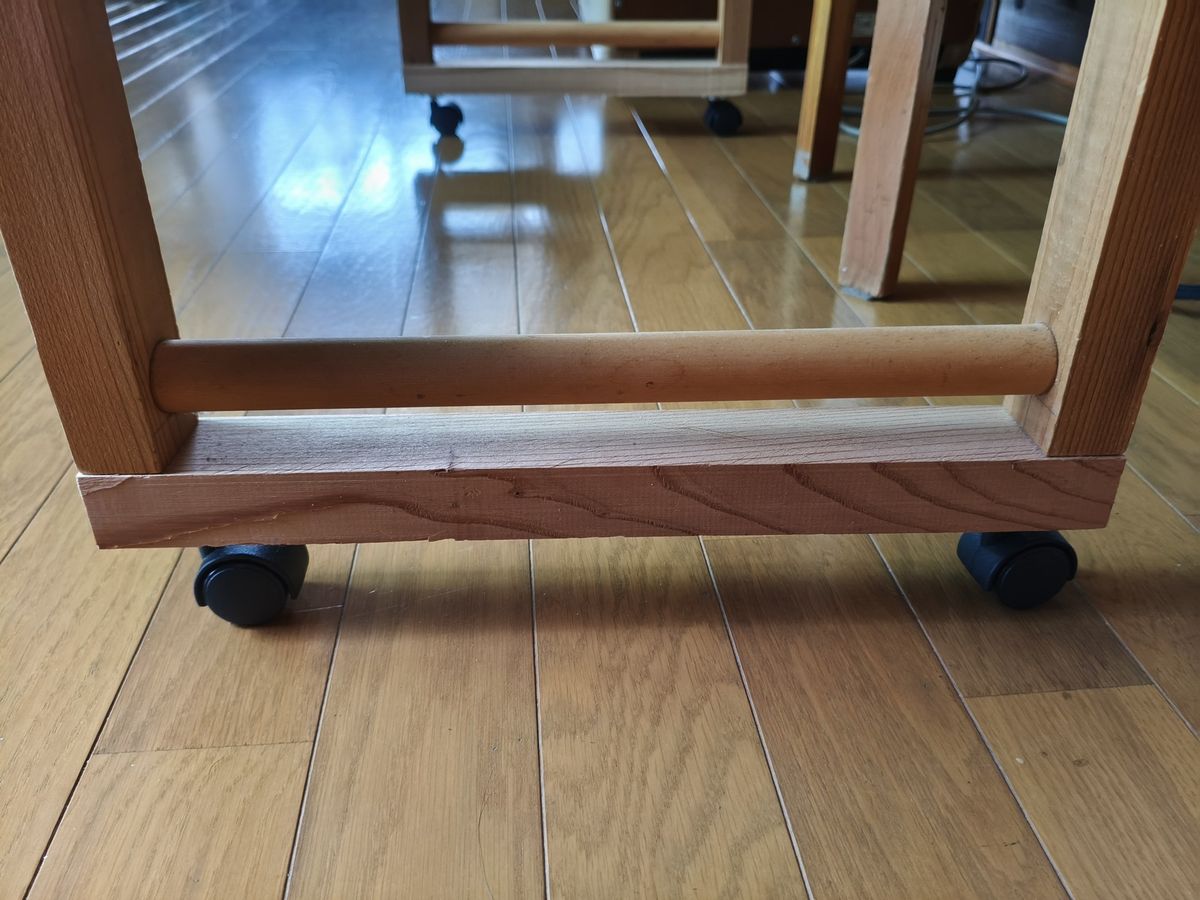
After assembling it
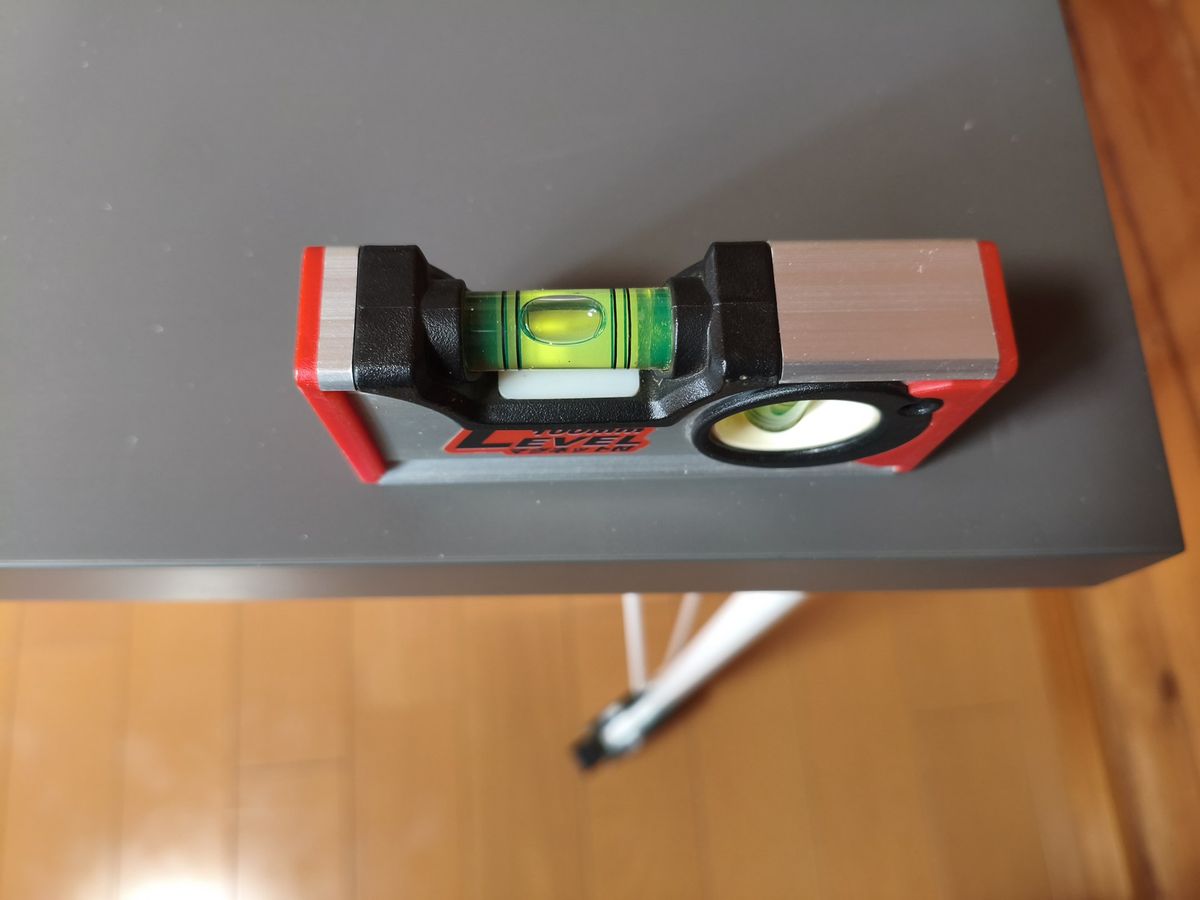
The desk seemed to be tilted slightly, so I measured it. There was a height difference of about 5 mm (0.2 in) from one side to the other.
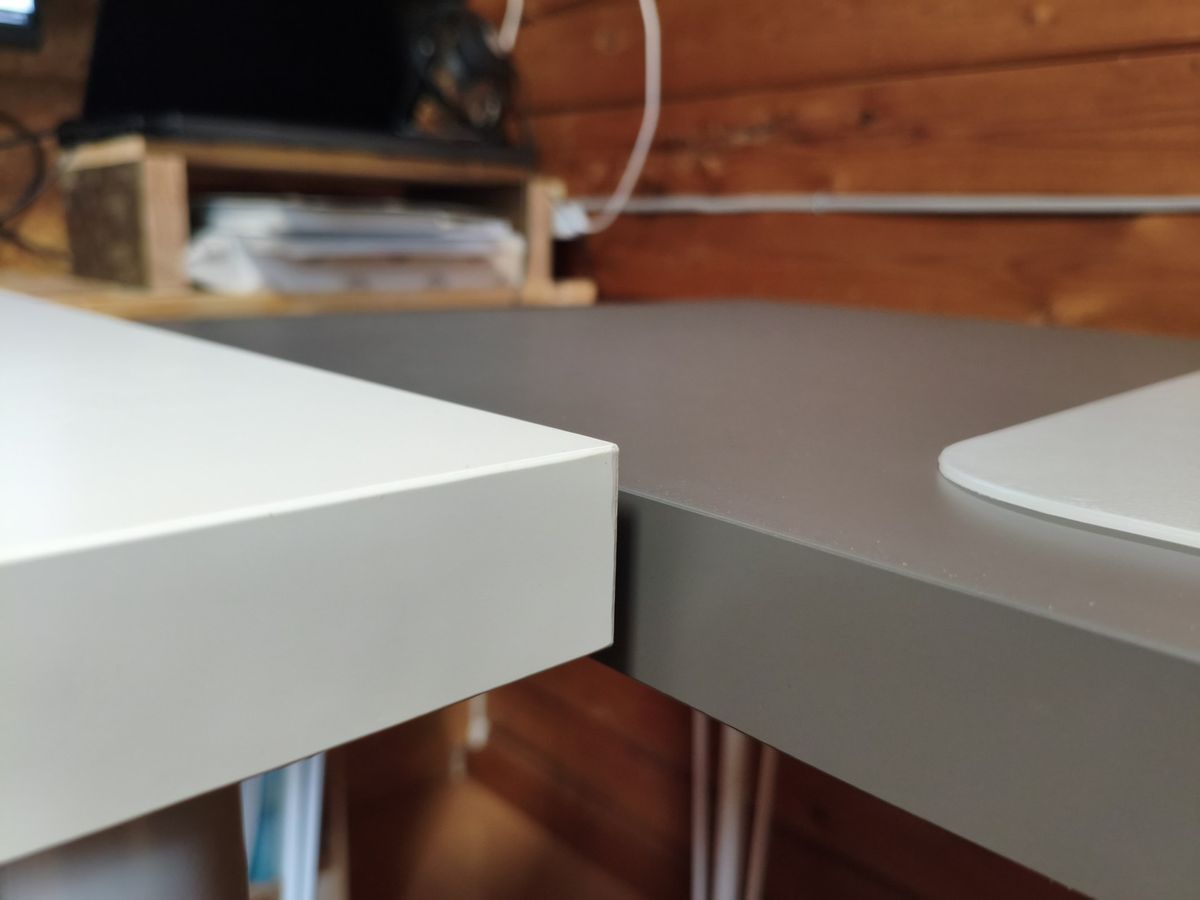
IKEA's official product pages list both types of legs as 70 cm (27 1/2 in) tall. So why didn't they match?
Although the listed dimensions are the same, a small difference seems to come from the ADILS mounting plate and the play in the KRILLE caster assembly.
My KRILLE legs measured 697 mm (27.44 in). A 3 mm difference seems rather large for a manufacturing tolerance, especially since all of them were equally short, so perhaps that is simply how they are designed. If I pulled the play in the caster's threaded section all the way out before measuring, the leg reached 700 mm (27.56 in). The figure on IKEA's website may therefore be the nominal design dimension rather than the leg's height under load.
With ADILS, the mounting plate screwed to the underside of the tabletop does not appear to be included in the listed leg height. That adds roughly 2 mm (0.08 in).
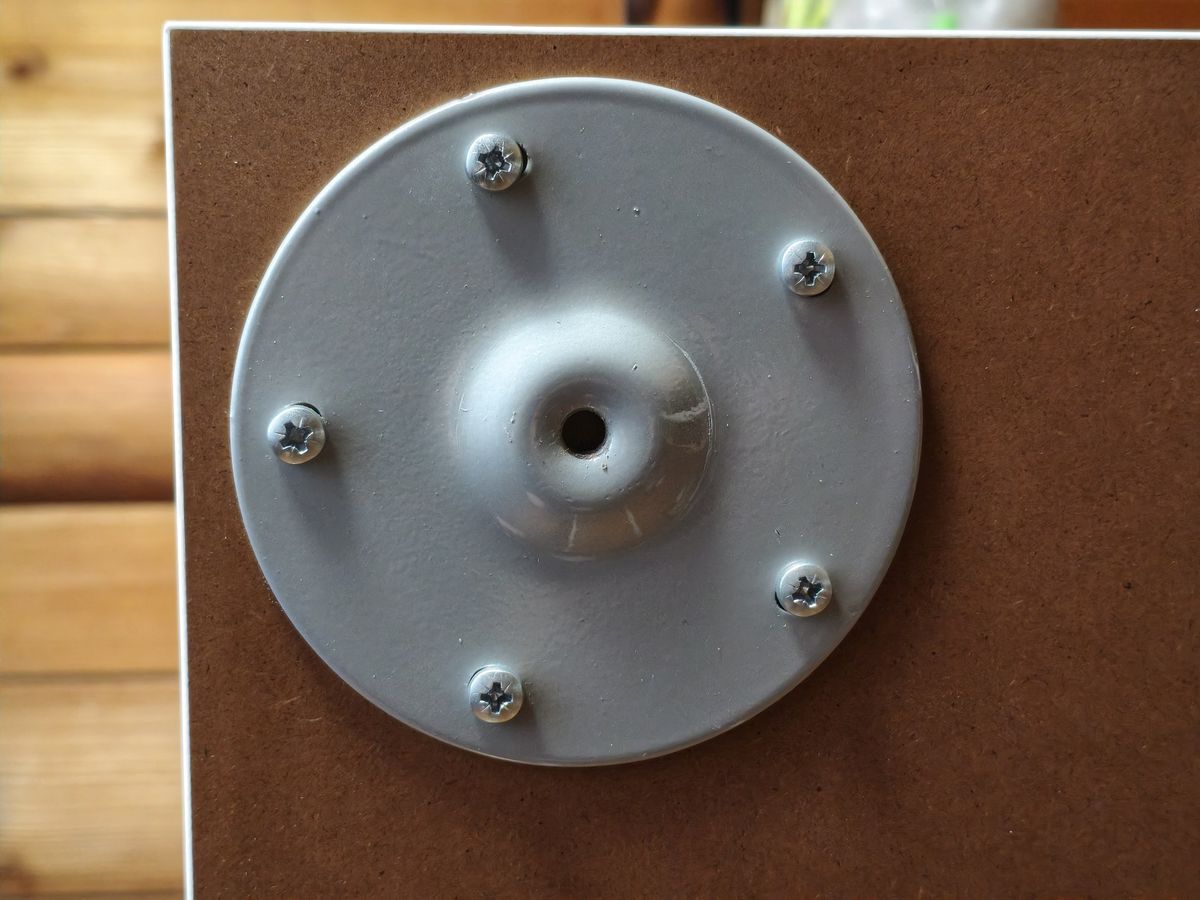
The official measurement diagram does indeed show the dimension for the leg itself, without the mounting plate.
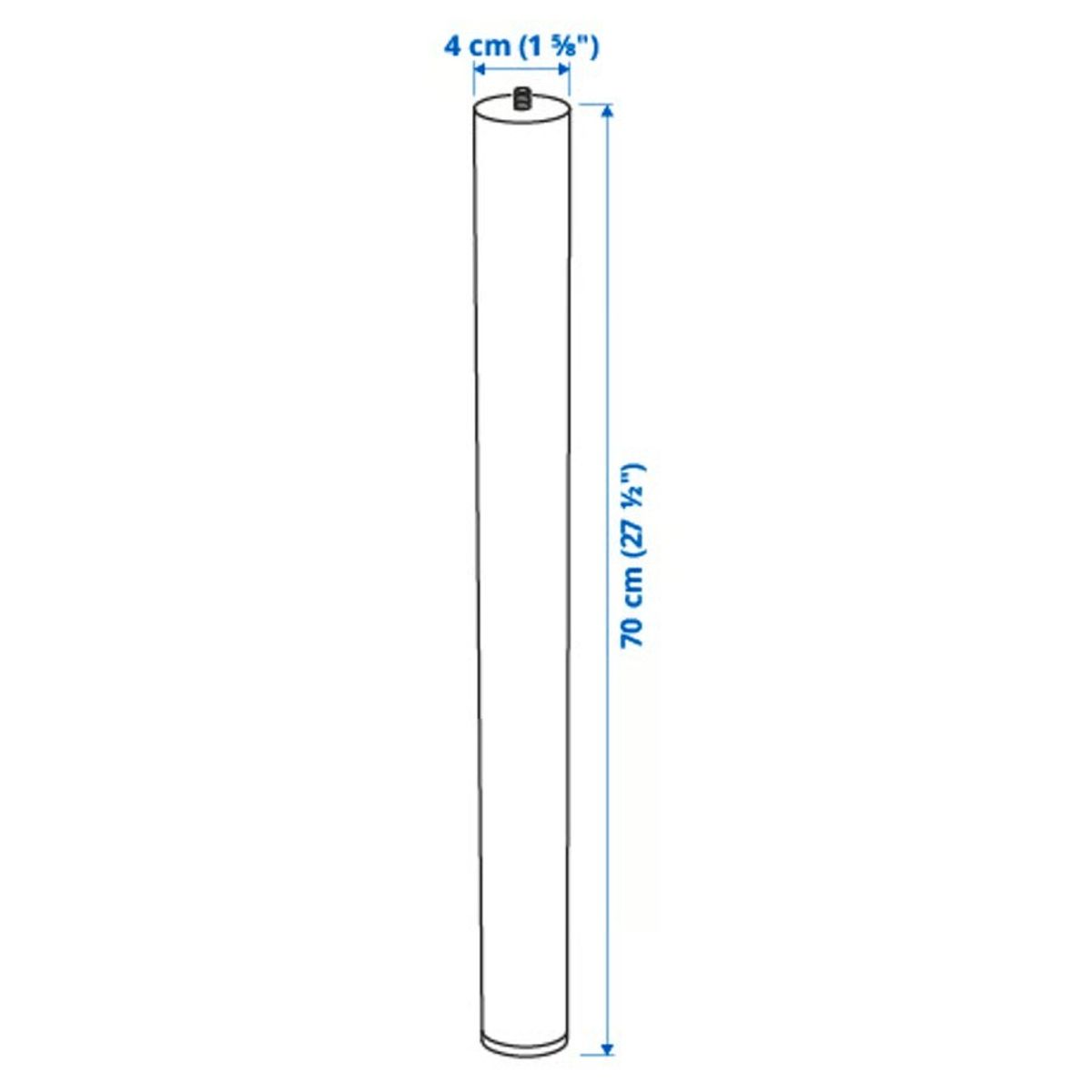
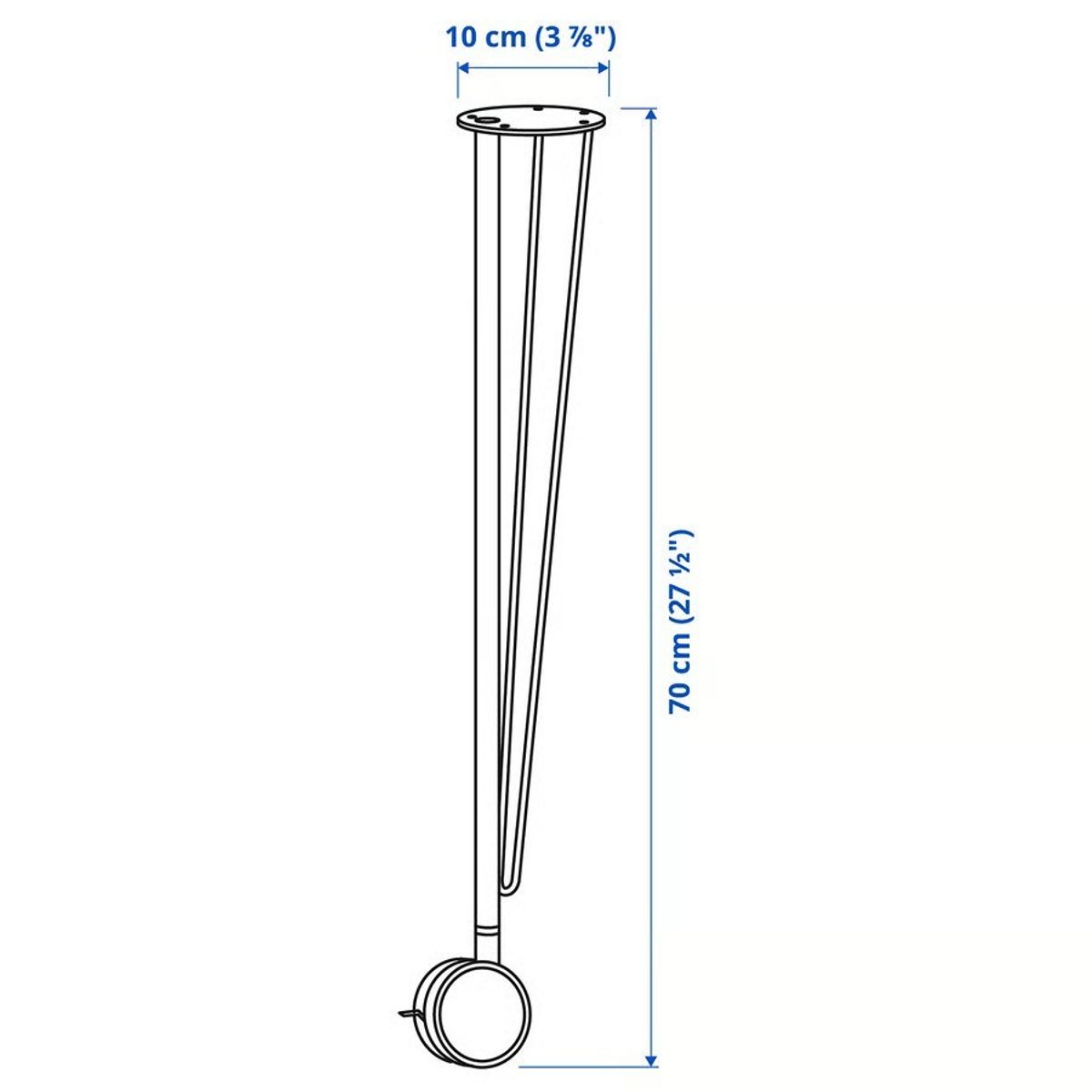
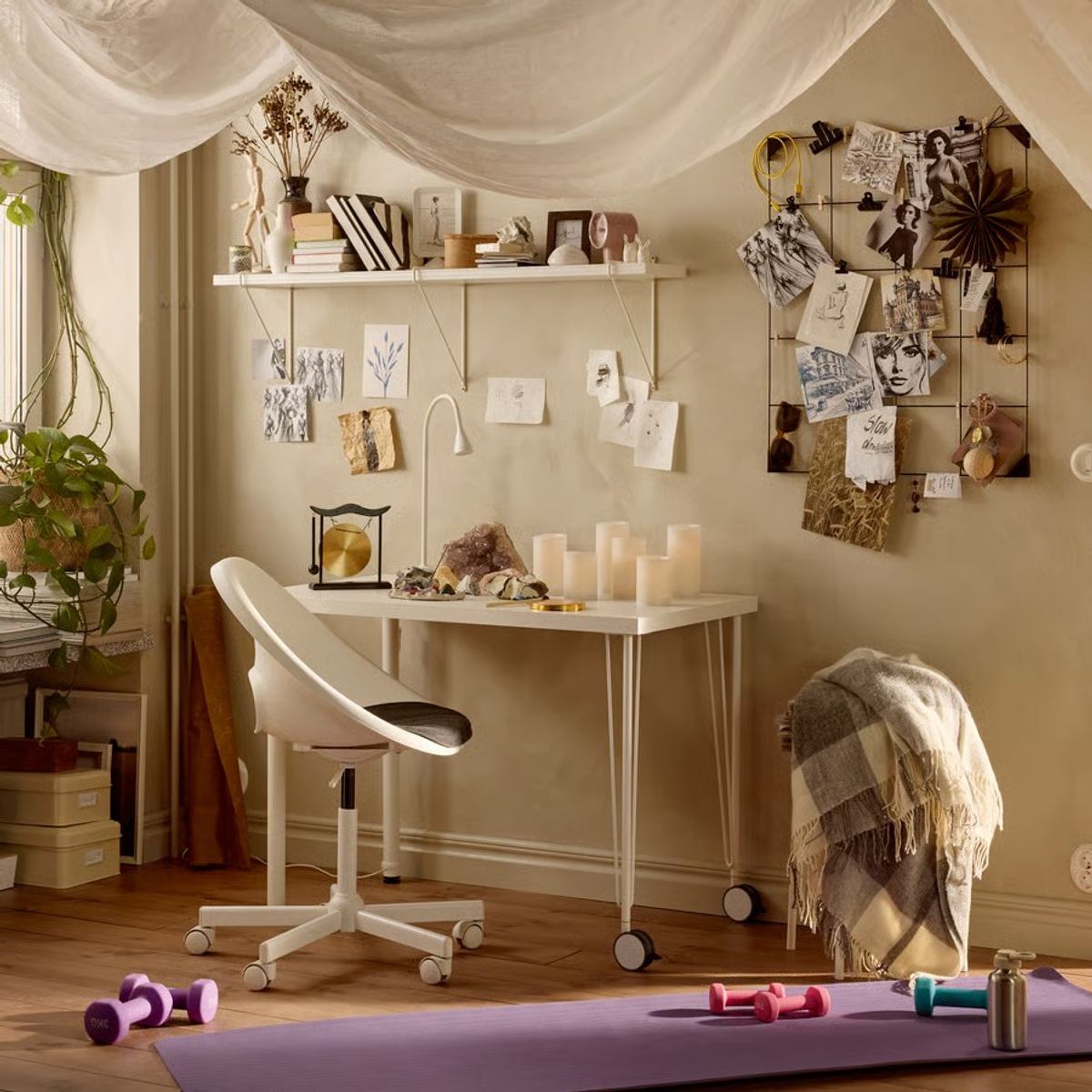
IKEA even showed an example with standard legs on one side and caster legs on the other, so I assumed the two types had been designed to line up perfectly. They had not.
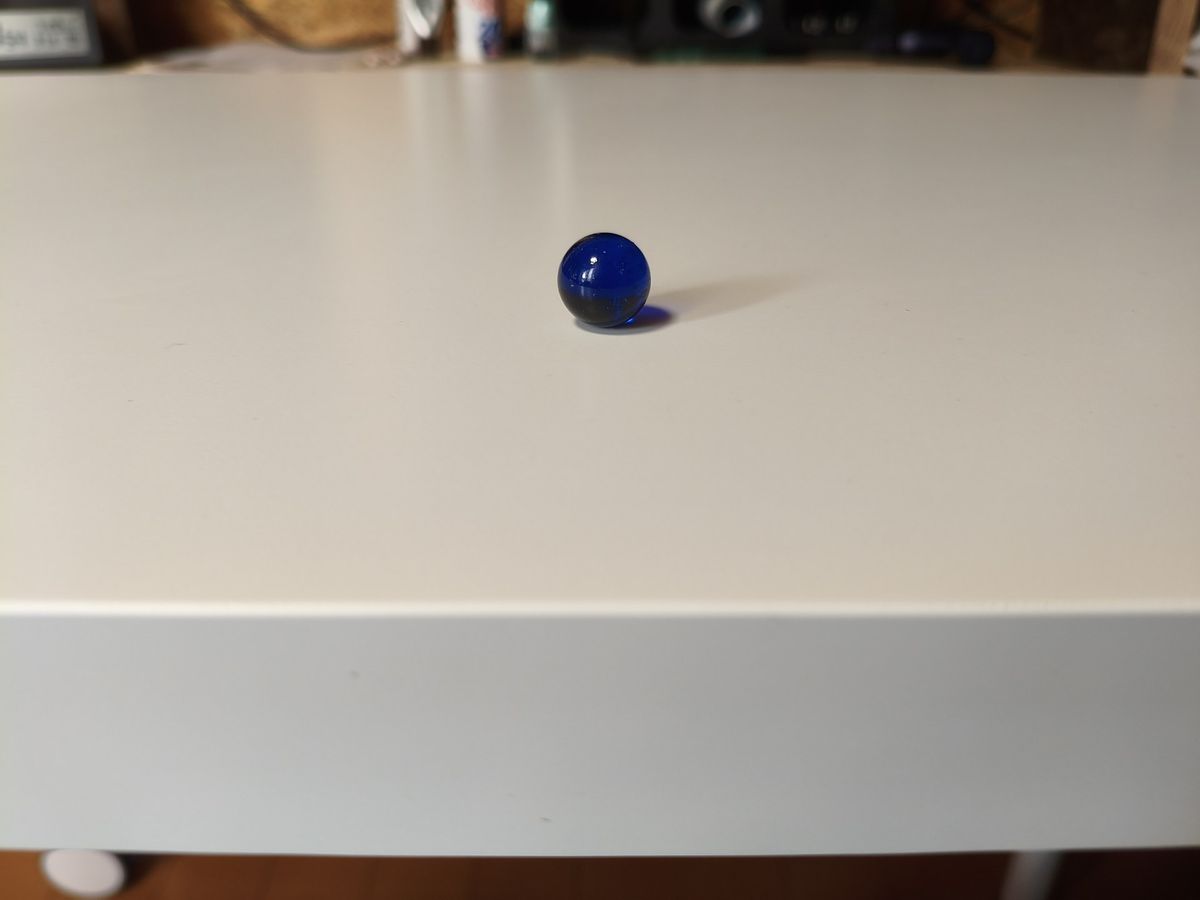
If the caster legs had been longer, I could have used the adjustable feet on the ADILS legs to compensate. But with the caster legs shorter, there was nothing I could adjust. The slope was only about 0.3 degrees—not enough to send a pen rolling across the desk. Maybe IKEA's attitude is, “Don't sweat the small stuff.” Still, once I noticed it, it bothered me.
What to do next
Once I had noticed the tilt, I could not stop noticing it. On top of that, the 100 × 45 cm (39 3/8 × 17 3/4 in) tabletop I had bought felt a little too shallow.
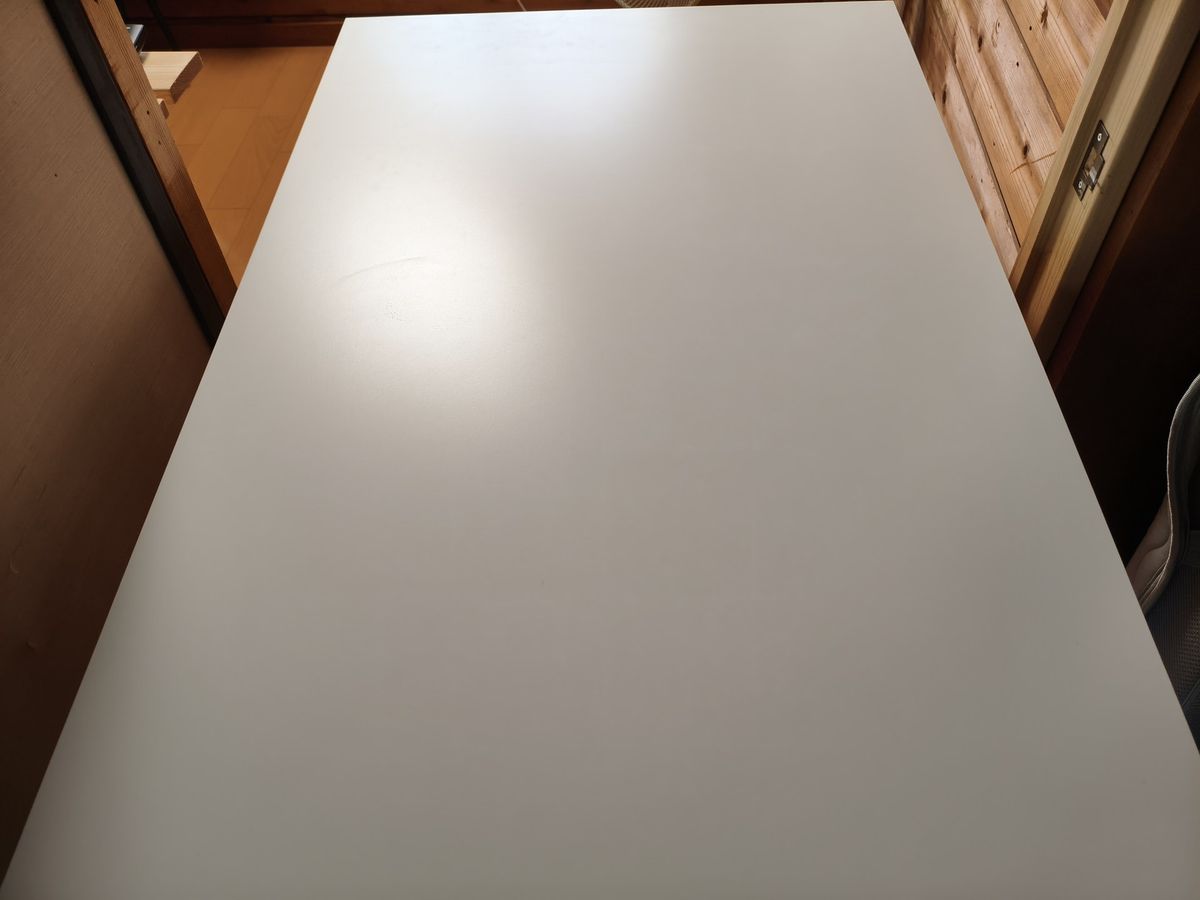
Then I had an idea: I would buy a 100 × 60 cm (39 3/8 × 23 5/8 in) tabletop, plus two more standard legs and two more caster legs. I could put all four caster legs on the 100 × 45 cm top and use it as a secondary desk, while putting all four standard legs on the 100 × 60 cm top.
The problem with that plan
I went back to IKEA and bought the following:
Tabletop: LINNMON 100 × 60 cm (39 3/8 × 23 5/8 in)
Standard legs: ADILS, two
Caster legs: KRILLE, two
At first I thought it was perfect: much more workspace and no tilt. Then, when I moved the desk out of the room that night, I realized something.
The larger desk was even harder to get through the doorway.
DIY Fix
I went back to my original idea: two caster legs and two standard legs. For the height adjustment, I considered putting washers on the caster-leg bolts, but adding a thin wood spacer between each caster leg and the tabletop seemed simpler.
Materials
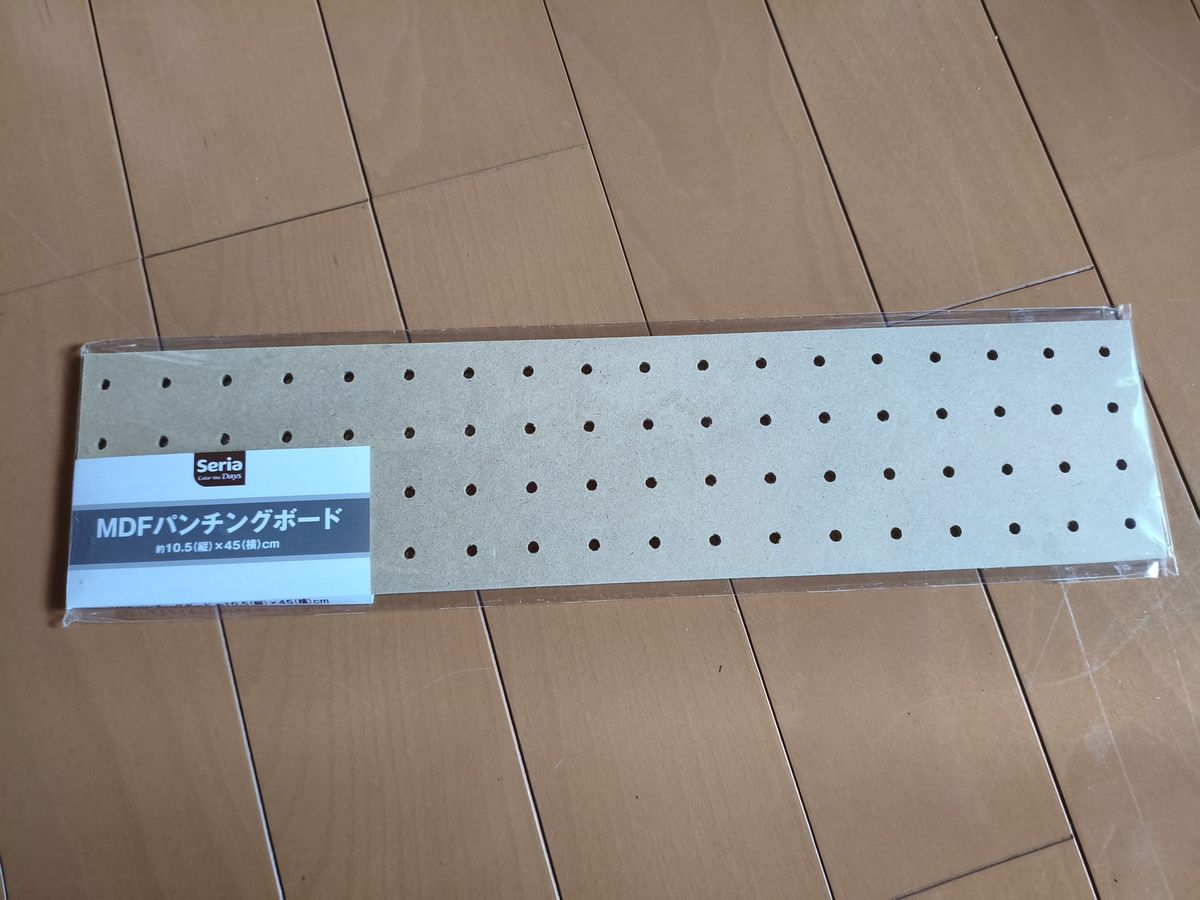
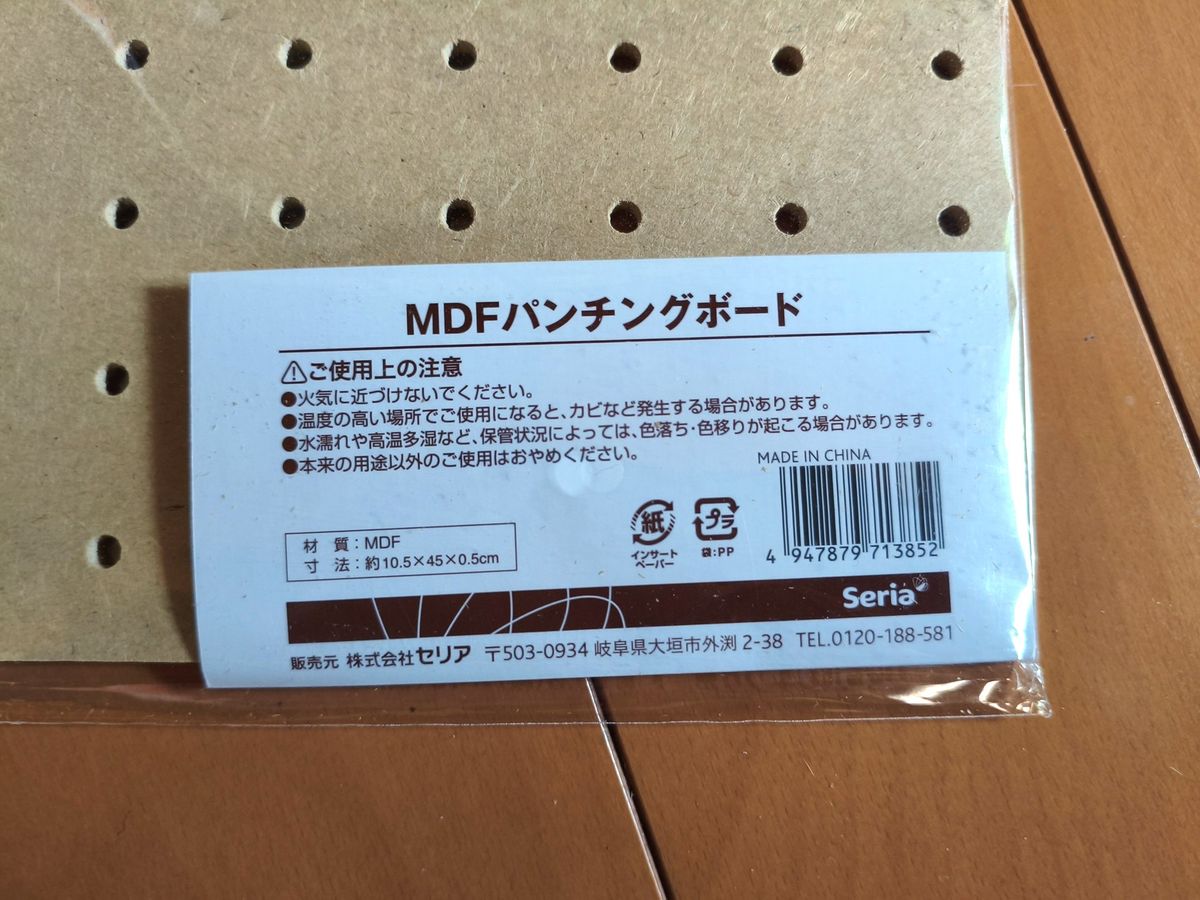
I found a suitably sized board about 5 mm (0.2 in) thick at Seria, a Japanese dollar-store chain.
Ideally, I would have used round pieces 105 mm (4.13 in) in diameter. But cutting circles would be a hassle, and it did not seem worth spending much money on a hidden part, so I settled for 105 mm (4.13 in) squares.
A coaster or another ready-made piece in just the right size would eliminate the need for cutting, but I could not find anything suitable.
Cutting
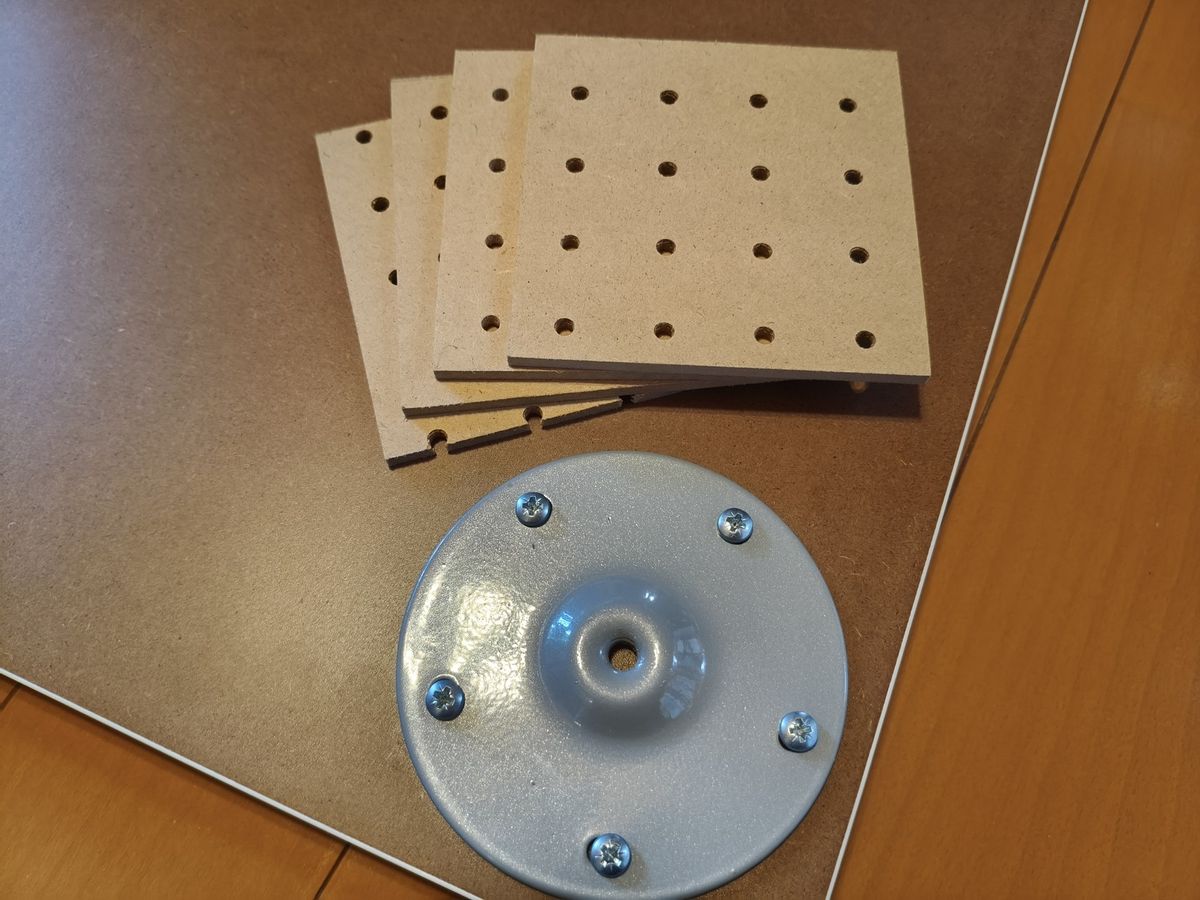
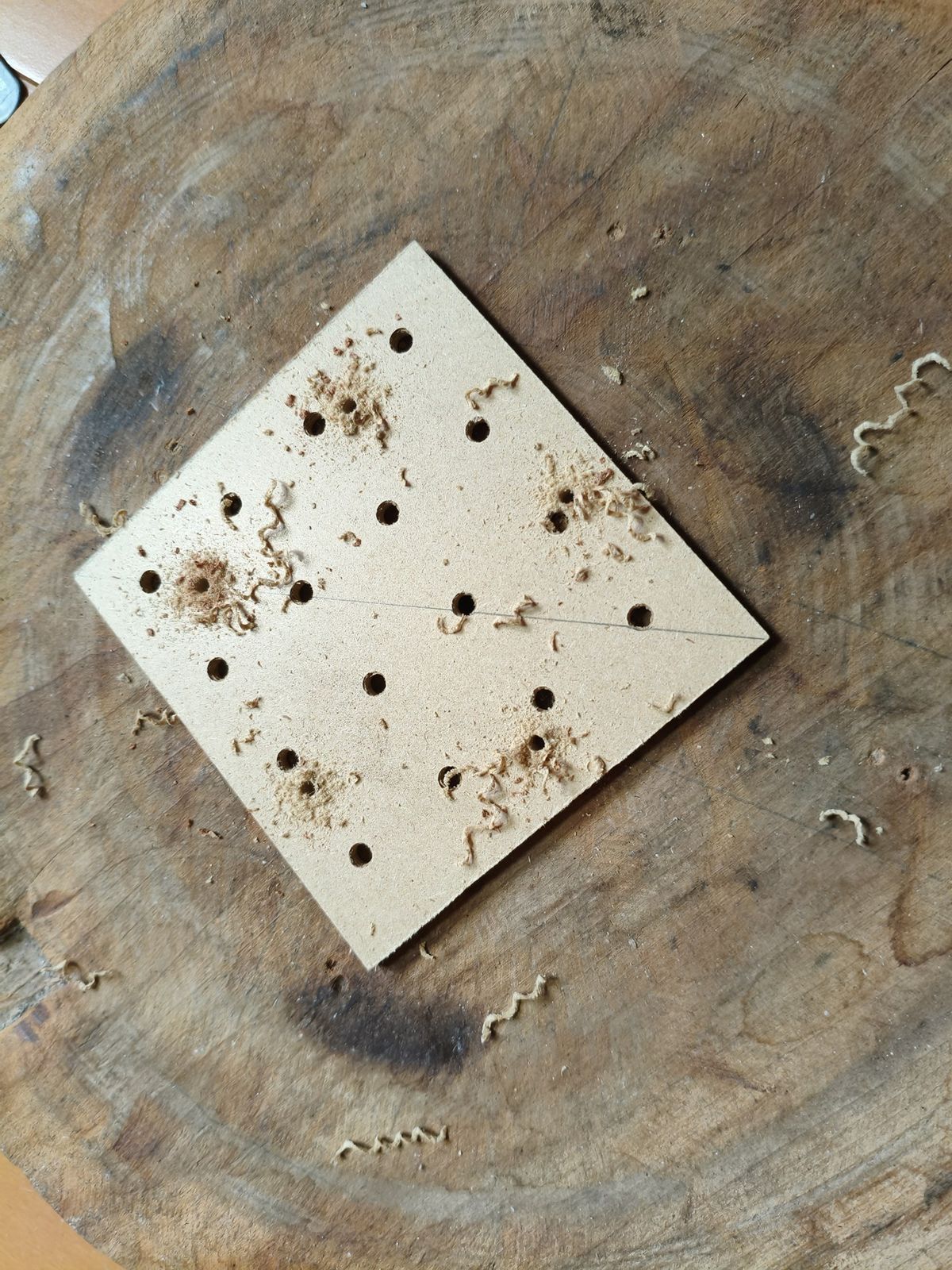
I cut the board into 105 × 105 mm (4.13 × 4.13 in) squares.
Positioning
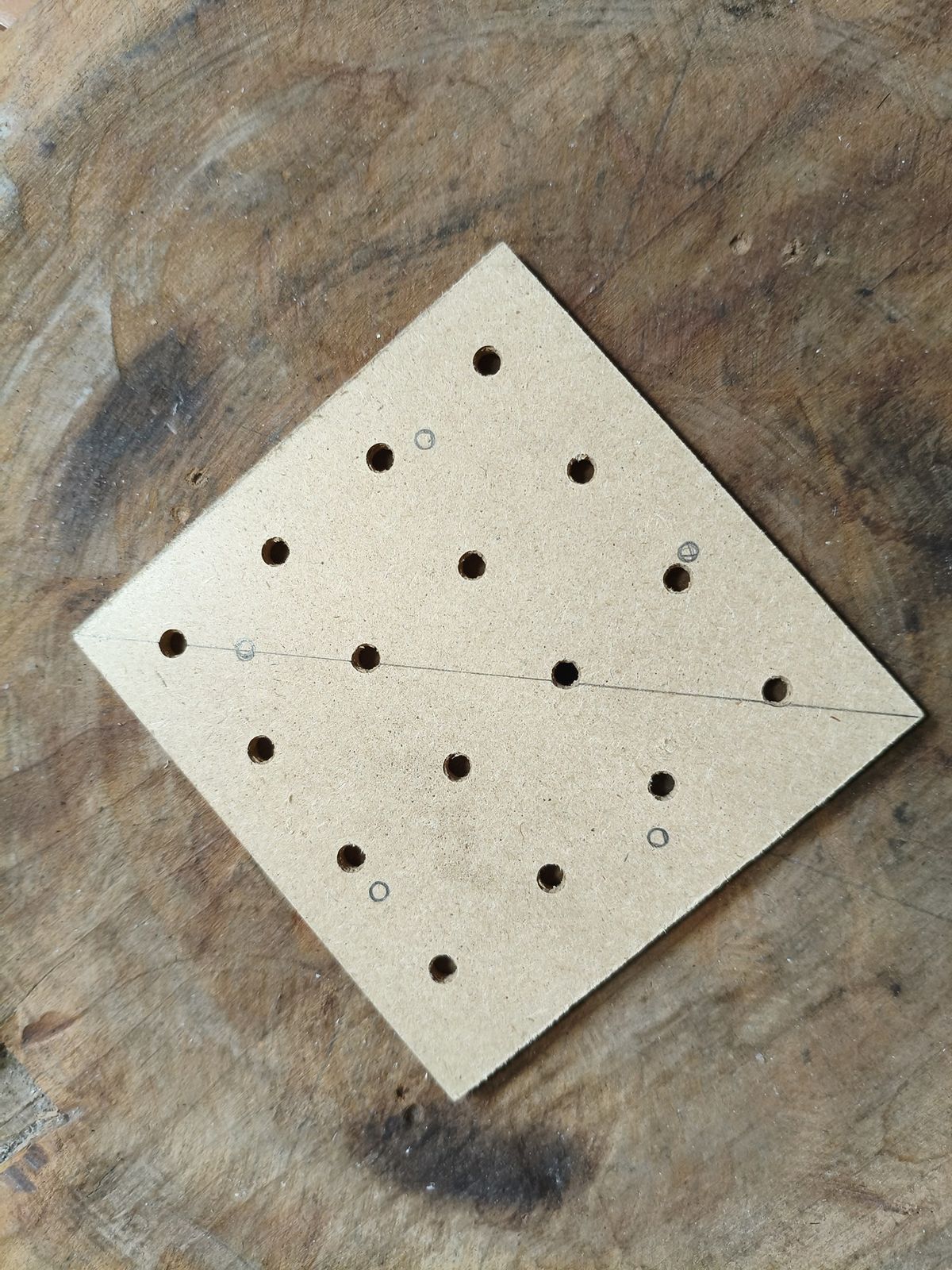
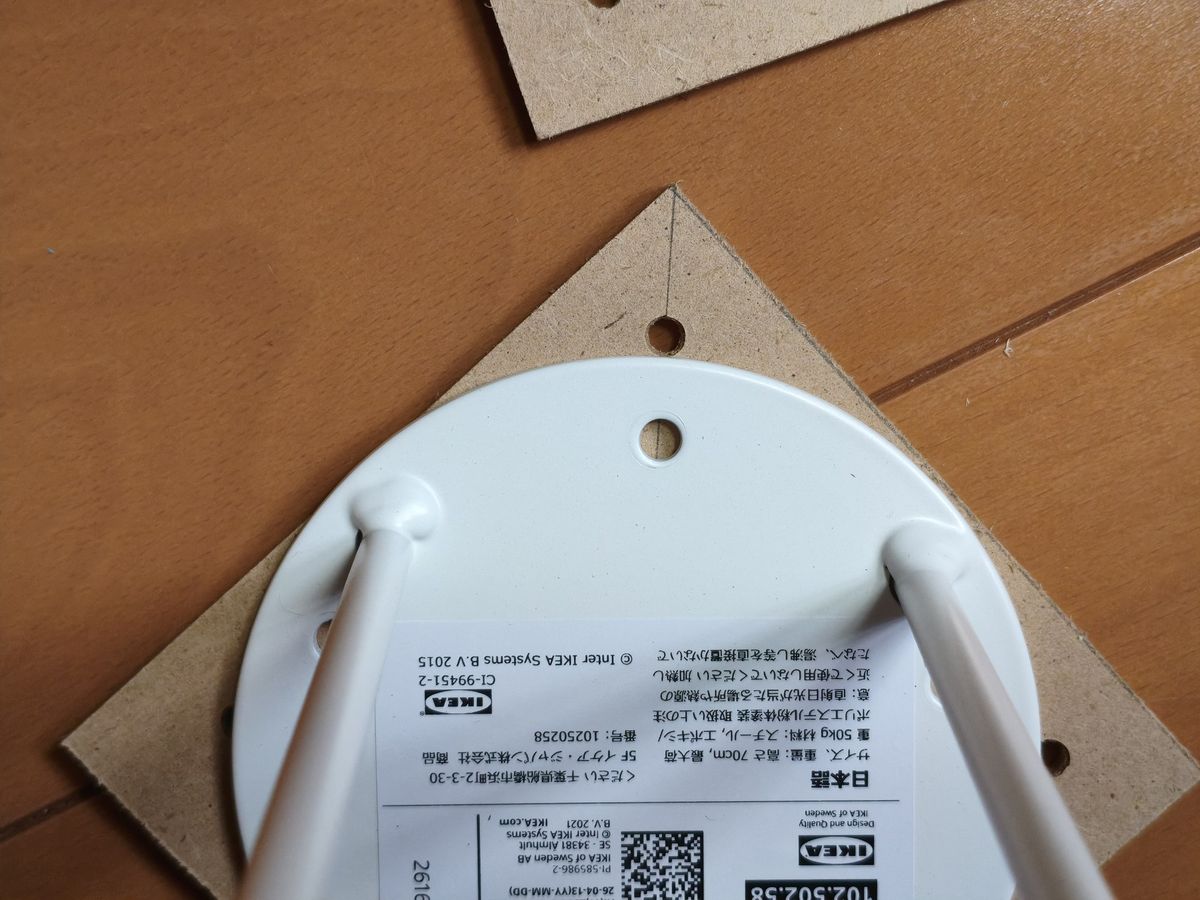
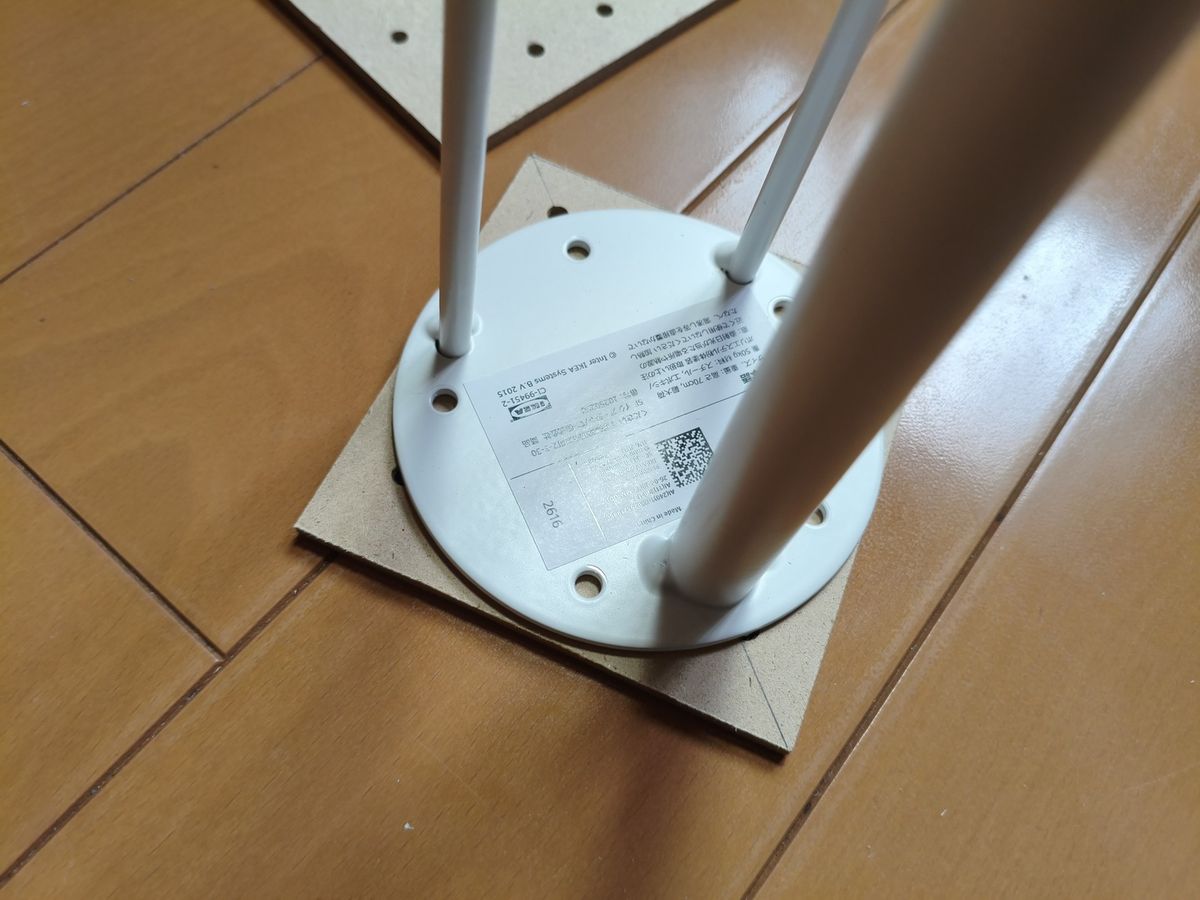
I drew diagonal lines across each square and used their intersection to center the leg. That did not leave the spacer perfectly square with the tabletop, as I discovered during installation, but it did not stick out past the edge, so it was good enough.
Drilling
I drilled a clearance hole at least 5 mm (0.2 in) wide in the center.
The center bolt is fully threaded, so the hole needs to be large enough for it to pass through freely. Otherwise, the bolt can lift the spacer away from the tabletop as it is tightened.
Installation
I kept the screws that came with the legs rather than replacing them with longer ones. I decided that losing about 5 mm (0.2 in) of screw depth would not be a problem.
These caster legs are frustrating to screw in, though. As other reviewers have noted, installation would be pretty tough for someone without the right tools or much DIY experience.
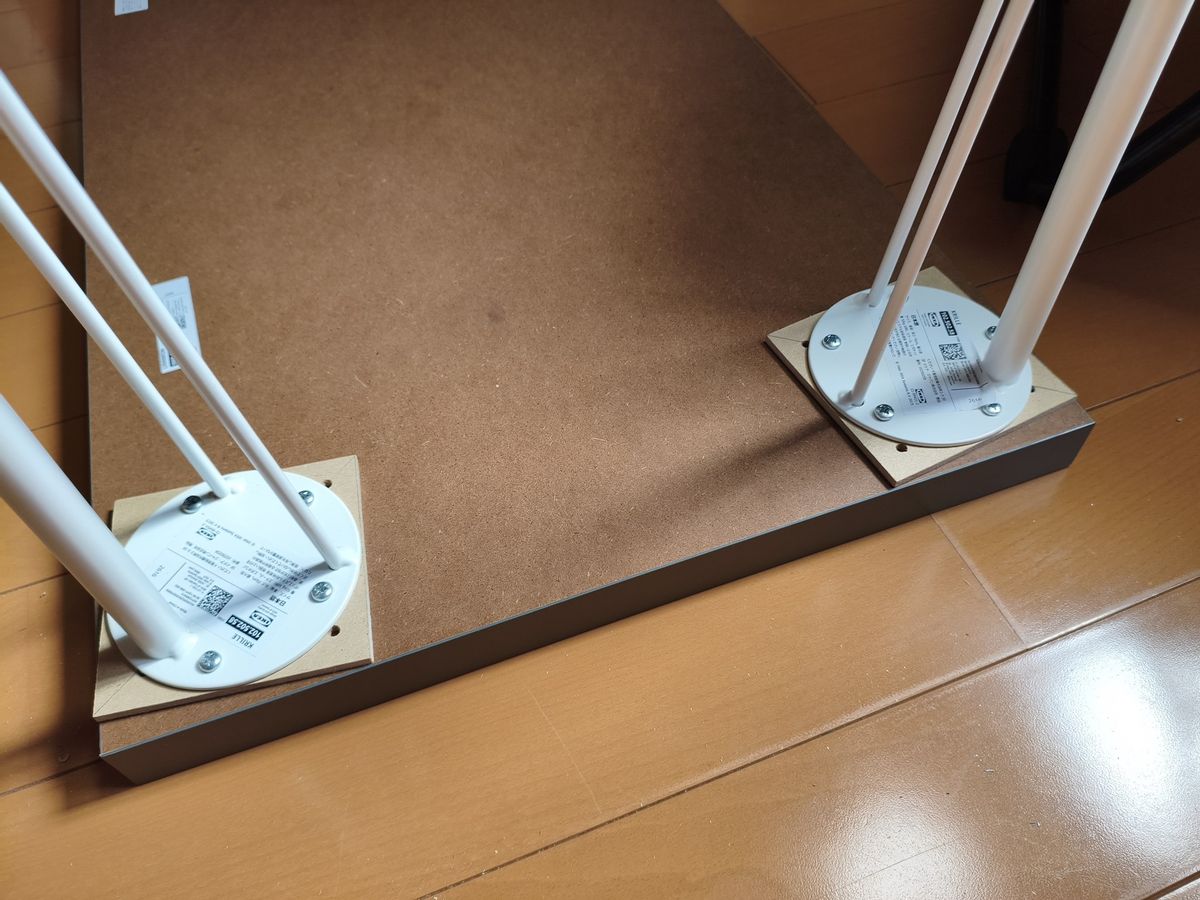
Finished
The crooked spacer still bothers me a little, but it will be hidden anyway, so I am choosing not to worry about it.
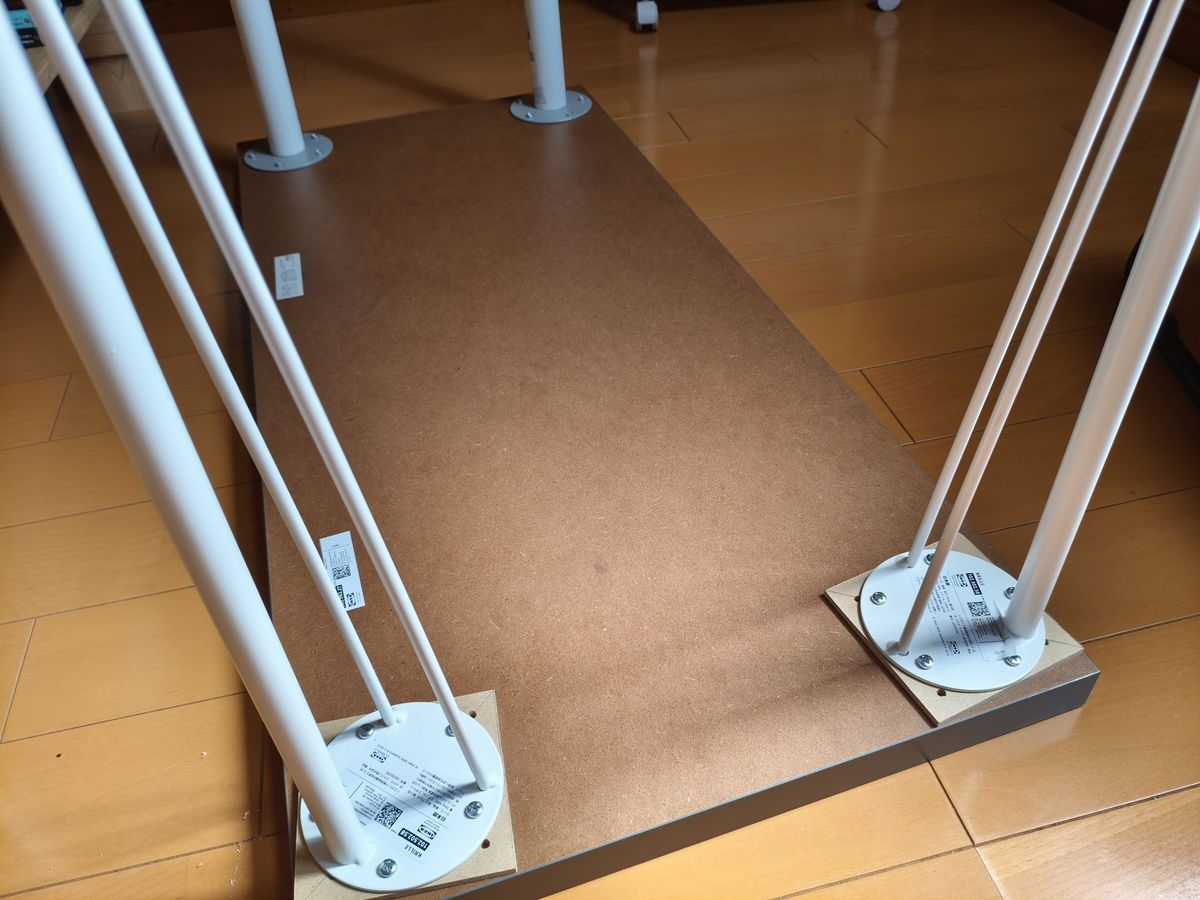
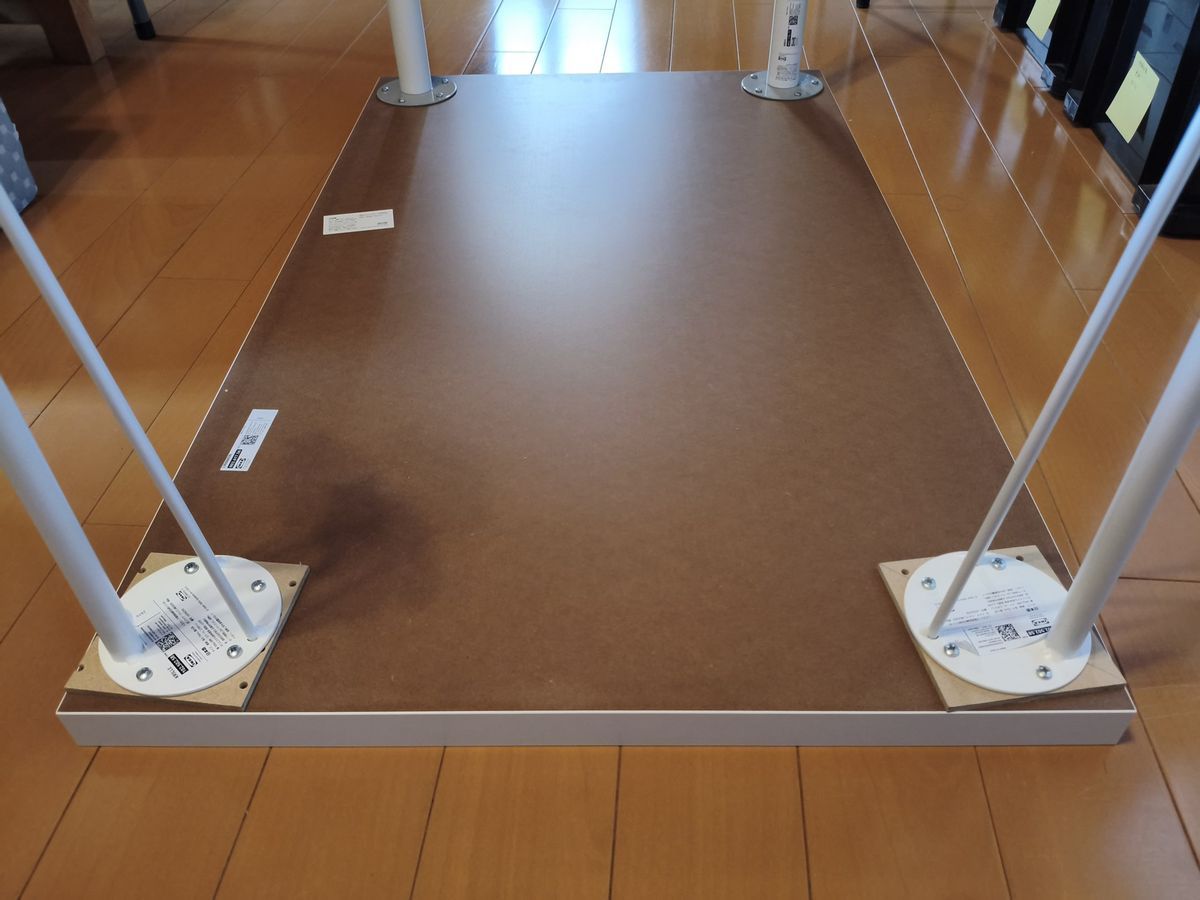
Result
If I measure very precisely, the desk still has a slight slope, but not enough to bother me.
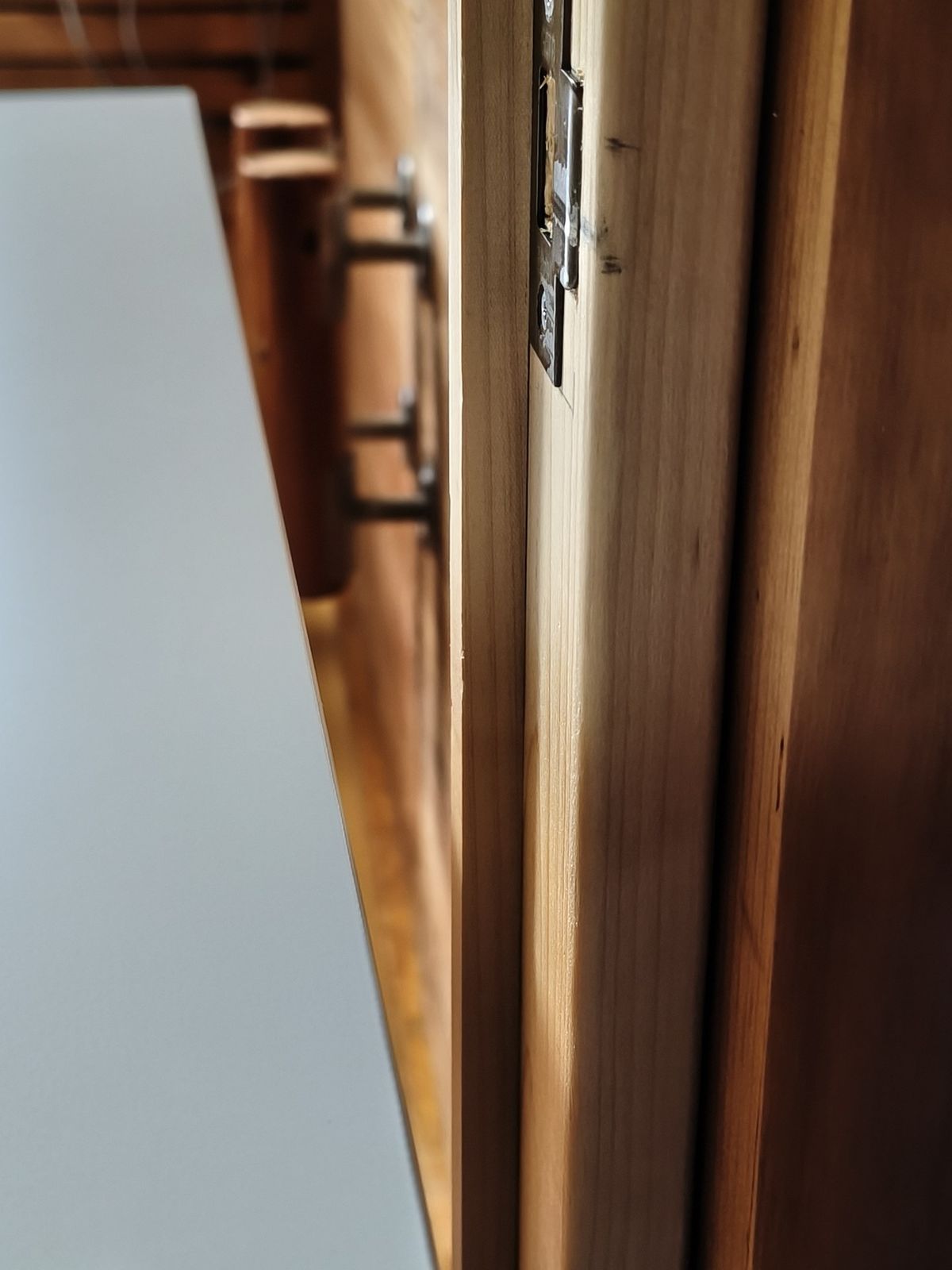
And now I can move it through the doorway without worrying about pinching my hand against the frame.
Final Thoughts
I cannot recommend mixing KRILLE caster legs and ADILS standard legs unless the slight tilt does not bother you. If it does, correcting it yourself is far too much trouble unless IKEA starts selling a dedicated spacer.
Honestly, it would be better to use inexpensive ADILS legs on all four corners and add furniture sliders. The desk itself is inexpensive, so spending much more on the legs feels unnecessary. It is also light enough that, in a typical room, you can move it easily without going through any of this.
In fact, unless you have a specific reason to use caster legs, I would not particularly recommend KRILLE legs themselves. They are awkward to install, they make it harder to remove the legs for compact storage, and they cost considerably more than the standard legs.
DID YOU ENJOY THIS ARTICLE?
制作活動を支援する / Support my work
文章、アート、デザイン、個人開発を続けるための支援を、コーヒー一杯分から受け付けています。 / Help me keep making essays, art, design, and independent software.

Information